


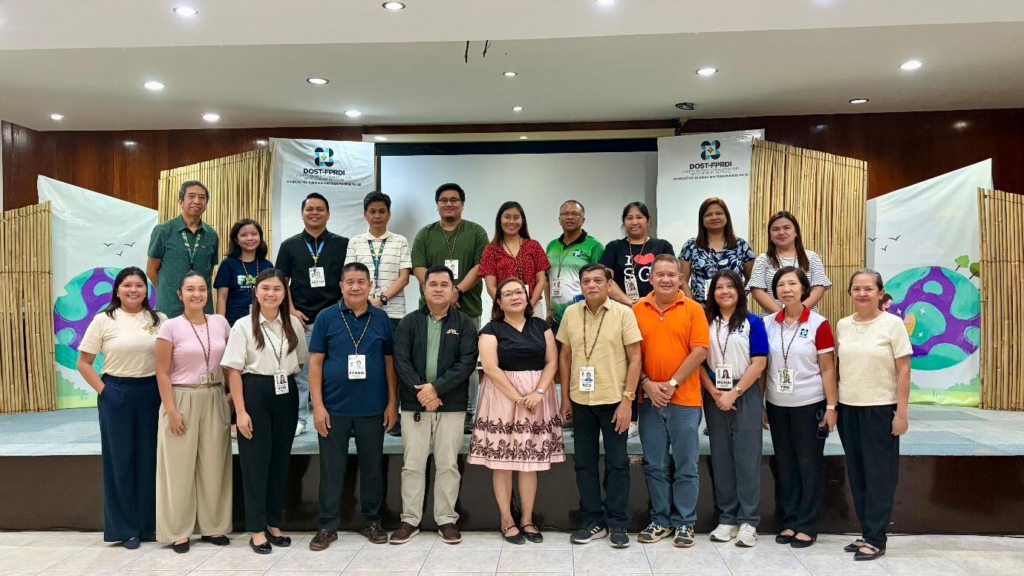
Charting a collaborative, forward-thinking future for Philippine smart manufacturing, Dr. Gabriel Sampedro formally concluded his short-term engagement as a Department of Science and Technology (DOST) Balik Scientist with the Metals Industry Research and Development Center (DOST-MIRDC).
The formal Exit Report Presentation, held at the Titanium Building inside the DOST-MIRDC compound, highlighted six months of intensive research, industry consultations, and policy design aimed at accelerating Industry 4.0 readiness across the nation.
Driving the CUATRO Program Forward
A central cornerstone of Dr. Sampedro’s engagement was his strategic support for the Connected and Unified Autonomous Technologies with Automation and Robotics (CUATRO) Program. As an R&D initiative engineered to expand Philippine capabilities in automation, robotics, and the Internet of Things (IoT), CUATRO relies heavily on building deep, regional pipelines.
Orange Magazine PH, which previously covered the program’s milestone progress last June 6, has closely followed how this initiative directly shapes the technology adoption curve for local micro, small, and medium enterprises (MSMEs).
During his presentation, Dr. Sampedro emphasized that lasting innovation cannot exist in isolation. He highlighted the vital “triple helix” model of government, academe, and industry alignment:
-
The Government provides essential coordination, facilities, and funding.
-
Universities contribute decentralized regional research, assessing local MSME needs.
-
Industries serve as implementation partners, identifying real-world operational pain points.”The CUATRO team is relatively small, but its mandate covers the entire country,” Dr. Sampedro noted during his exit presentation. “A team of around 30 cannot independently reach enterprises across more than 7,000 islands. Universities can serve as regional partners where MSMEs share their challenges, and faculty and students develop solutions through research.”
Re-engineering Innovation and Technology Adoption
Throughout his six-month tenure, Dr. Sampedro’s contributions delivered concrete frameworks designed for immediate implementation by DOST-MIRDC.
-
Collaboration FrameworkPolicy LevelEstablishing the Industry–Academe–Government Collaboration Framework to anchor regional digital transformation initiatives.
-
Operational WorkflowsExecution LevelDrafting standardized guidelines and workflows for university-based technology-needs assessments within local tech ecosystems.
-
Smart Hub Operationalization Infrastructure Level Guiding the operational blueprints for the CUATRO Smart Manufacturing Hub to evaluate and match enterprise maturity levels.
-
Cross-Border Pipelines Sustainability Level Bridging local development with international networks, connecting Philippine institutions with South Korean and ASEAN innovation ecosystems. Reflecting on the challenges of introducing automation and AI to traditional sectors, Dr. Sampedro leaned on shared collective wisdom to summarize his experience:
“Collaboration is essential if we want to achieve lasting impact. We need to move beyond working in silos and create more opportunities for government, academe, and industry to communicate and work together. As the old proverb goes, ‘If you want to go fast, go alone; if you want to go far, go together.’ That is exactly the kind of approach CUATRO needs.”
Beyond the Term: The Road to 2027
While his official assignment with DOST-MIRDC has drawn to a close, Dr. Sampedro’s nation-building efforts continue through the private sector and specialized academia. As the Founder and CEO of Philippine Coding Camp, his future initiatives are geared toward closing the emerging technology skills gap.Chief among these forward-looking projects is the upcoming Southeast Asian Stakeholder Summit on Generative AI for Education (SEA-SSAIE) – Philippines 2027, organized alongside the Southeast Asian Ministers of Education Organization and the UNESCO Chair at Asia Pacific University. The summit intends to directly connect local academic institutions with regional policymakers and technology developers to craft responsible AI governance frameworks. “Startups have greater flexibility to experiment, take calculated risks, and develop solutions quickly,” Sampedro explained. “When a startup succeeds and creates value for society, that success also reflects the success of DOST and the country’s innovation ecosystem. It’s about bringing global knowledge home and translating it into opportunities for nation-building.”