


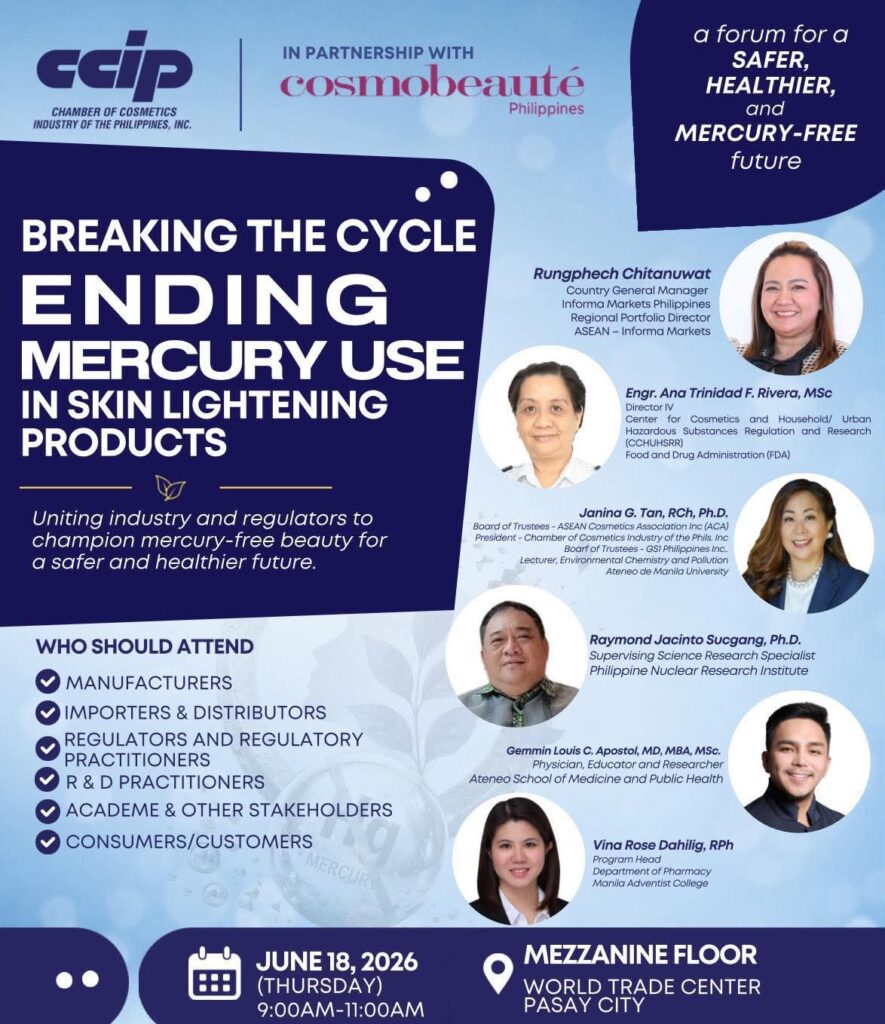
The Chamber of Cosmetics Industry of the Philippines (CCIP) has formally declared its strong support for the United Nations Environment Programme (UNEP) and Global Environment Facility (GEF) project, “Elimination of Mercury-Added Skin Lightening Products (SLPs) in Asia, Latin America, and the Caribbean,” reaffirming the Philippine cosmetics industry’s commitment to consumer safety, regulatory compliance, and responsible beauty.
As the leading organization representing the cosmetics sector in the Philippines, CCIP is taking a proactive role in strengthening industry awareness and public education regarding the dangers of mercury in cosmetic products while promoting safe, science-based, and globally compliant alternatives.
“Consumer safety has always been at the heart of a responsible cosmetics industry,” said CCIP president, Janina Gutierrez-Tan. “CCIP believes that beauty products should enhance well-being, never compromise it. We are proud to support global efforts to eliminate mercury-added skin lightening products and to help lead the conversation on safer skincare in the Philippines.”
Mercury remains a public health concern
Despite longstanding regulations prohibiting the use of mercury in cosmetics, mercury-containing skin lightening products continue to surface in local and online markets.
In January 2025, the Philippine Food and Drug Administration (FDA) warned consumers against multiple imported skin-lightening products found to contain dangerously high levels of mercury. Among the products identified were creams containing mercury concentrations ranging from 3,784 parts per million (ppm) to as high as 44,450 ppm—far exceeding the ASEAN Cosmetic Directive limit of 1 ppm. The FDA reiterated that mercury is prohibited in cosmetic formulations due to its harmful effects on human health.
The problem extends beyond isolated cases. Regulatory actions over the years, coupled with continued monitoring by government agencies and civil society organizations, demonstrate that mercury-laden cosmetics remain a persistent challenge. Advocacy groups have repeatedly documented the continued availability of banned skin-lightening products in physical markets and online platforms despite existing regulations and enforcement efforts.
Health experts warn that mercury exposure can affect the nervous system, kidneys, and other organs. Long-term use may result in serious health complications, particularly among women, pregnant mothers, and children. Mercury contamination can also pose environmental risks when products are improperly disposed of and enter waterways and ecosystems.
Industry leadership through Education and Advocacy
Recognizing the importance of industry leadership in addressing the issue, CCIP will undertake a series of initiatives beginning in 2026 to support the elimination of mercury-added skin lightening products and promote responsible cosmetic practices.
These initiatives include:
• An industry-wide pledge campaign among CCIP member companies supporting the UNEP/GEF project held at the EDSA Shangri-La Manila.
• A major forum and panel discussion to be held on June 18, 2026 at Cosmobeaute Philippines covering the following topics:
The harmful effects of mercury in skin lightening products
Mercury-free cosmetic formulations
Regulatory compliance and responsible manufacturing practices
• Educational lectures for students and future industry professionals on mercury exposure and Minamata Disease
• Ongoing regulatory updates and compliance education for industry stakeholders
• Sustained information campaigns through social media, newsletters, media engagements, and public awareness initiatives
Through these efforts, CCIP aims to engage manufacturers, raw material suppliers, distributors, brand owners, retailers, students, consumers, and policymakers in advancing a safer and more sustainable cosmetics industry.
Elevating standards, building consumer trust
CCIP emphasized that the overwhelming majority of legitimate cosmetic manufacturers operating within the Philippines adhere to strict regulatory requirements and invest significantly in product safety, quality assurance, and responsible sourcing.
As the recognized voice of the Philippine cosmetics industry, CCIP continues to work closely with regulators, industry stakeholders, and regional partners to strengthen compliance, promote best practices, and ensure that consumers have access to safe, high-quality, and internationally compliant cosmetic products.
The organization also actively participates in ASEAN-level cooperation aimed at harmonizing standards, improving regulatory alignment, and promoting responsible industry practices across the region.
“Consumer trust is the foundation of our industry,” added Gutierrez-Tan. “By supporting the elimination of mercury-added products and championing science-based, responsible skincare, we are helping build a stronger, safer, and more globally competitive Philippine cosmetics industry.”
