


There is a distinct magic in watching a city’s past seamlessly intertwine with its modern pulse. For travelers looking to dive beneath the surface of Taipei’s bustling shopping districts and neon-lit night markets, a deeply immersive journey into Taiwan’s golden age of transit awaits right outside Beimen MRT Station.
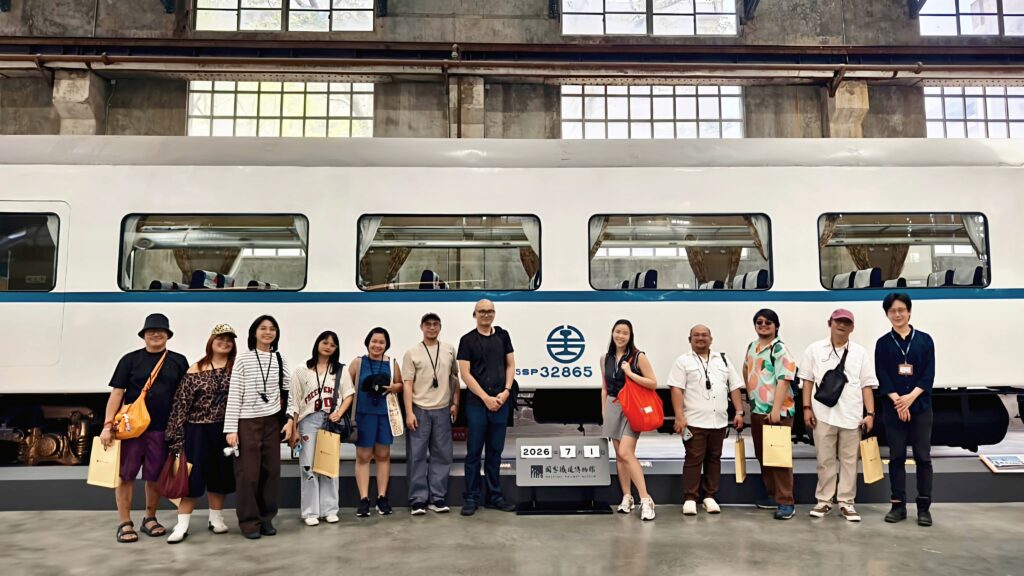
Orange Magazine PH recently joined an exclusive cultural heritage tour through the heart of Taipei. Our absolute standout stop? The magnificent National Taiwan Museum Railway Department Park (國立臺灣博物館鐵道部園區), a complex that not only unearths the island’s rich rail history but reveals the remarkable stories of its pioneering figures. Stepping through its gates feels less like walking into a traditional museum and more like stepping onto a living, breathing historical movie set.
From Artillery Factory to Modern Blueprint
Conveniently located near Taipei Main Station, the Railway Department Park is a meticulously restored national historic site with deep, layered history. Long before it became a haven for history buffs, the grounds served as a Qing Dynasty artillery factory, later evolving into the central nerve center for train maintenance and administration.
As our tour group gathered, our expert guide shared how the area transformed over the decades: “From 1975 to 1995, this was here for 10 years… for repairing the broken trains or machines,” our guide explained. “After the Japanese era, the Republic of China government started here, and this facility was kept in use until 2011.”
Our guide also noted how much Taipei has shifted around the park. “Before, during my young time, this area was a rice fields—nothing very outstanding. But with the development of the city, right now it is also part of the city center.”
Because land costs increased, the central maintenance functions were gradually moved to Fugang in 2015, paving the way for the government to restore the buildings and transition the complete facility into a massive public railway museum. Today, about 25% of the complete historical grounds are open for exploration.
The Visionaries Behind the Tracks
Our journey was not just about trains, but about the people who built them and the communities they shaped. Our guide began the tour not with massive locomotives, but with the stories of visionaries like Chin Lien and Cheng, Wan Ching, whose engineering prowess was instrumental in laying the tracks that connected Taiwan’s north and south.
“Chin Lien-ch’eng was a master of bridges,” our guide explained, pointing to detailed models of early railway crossings. “His ability to solve complex hydrological and geological problems was crucial. At a time when modern technology was in its infancy, his understanding of materials and flow dynamics was ahead of its time.”
As we walked through the impeccably preserved Railway Department building, once the administrative heart of the network, the sheer scale of the historical effort became clear. “Cheng, Wan Ching,” our guide continued, “was focused on locomotive development. He was not only an engineer but a polymath who understood the entire ecosystem of rail travel – from fuel efficiency to crew management. His work ensured that the trains didn’t just run; they ran with reliability.”
The tour portion that really brought this period to life was the meticulously detailed exhibits on survey work. We saw the actual transit instruments and levels used by these pioneers, a stark reminder of the meticulous, often hazardous, physical work that preceded every kilometer of track. “They had to traverse jungle and climb mountains, mapping the route by hand,” our guide emphasized, holding a surveyor’s notebook filled with intricate calculations.
Moving deep into the museum’s core, we arrived at the massive dioramas illustrating different eras of development. It was here that the impact of early engineering was visually demonstrated. Our guide paused at the display showing the construction of the challenging central railway line. “This was the true test of their mettle,” he said, referencing a picture of workers excavating a tunnel. “This wasn’t just engineering; it was endurance. The stories of workers battling disease, difficult terrain, and monsoon conditions are as much a part of the railway history as the locomotives themselves. The work of Chin Lien and Cheng, Wan Ching, was to turn a monumental dream into reality, one spike at a time.”
Standout Highlights from the Tour
As we explored the historic complex, a few unforgettable spots captured our attention:
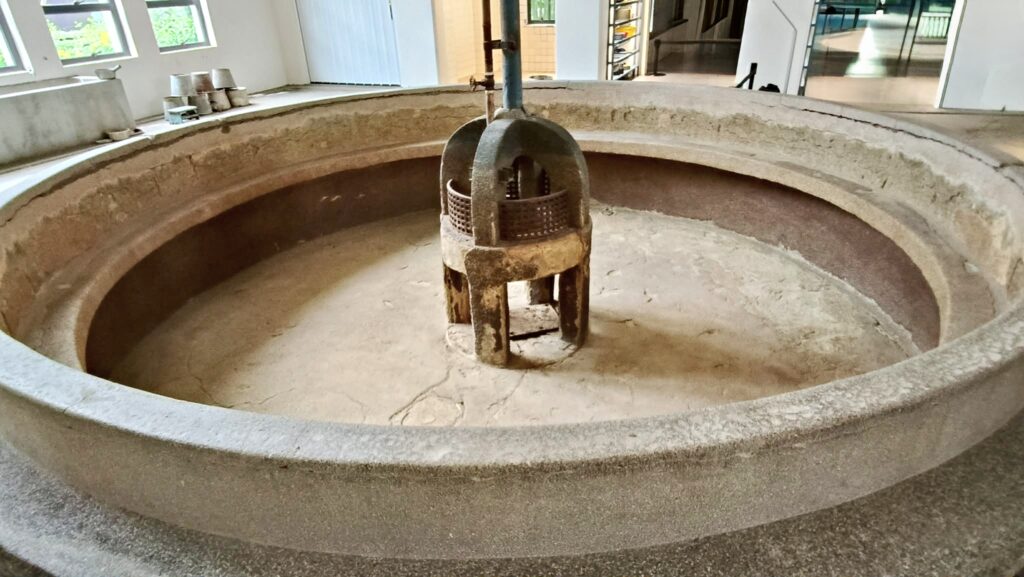
- The Employee Bathhouse – One of the most unique buildings on the tour is a curved facility designed entirely around worker wellness. “The building we’re in right now… this is for the employees to take a bath after work,” our guide shared as we walked inside. “The facility includes not only taking a bath but also laundry service.” Inside, the architecture is brilliant: a central fountain was used for washing clothes and rags. Once clean, employees moved into a dedicated locker and bathing area featuring two large round hot baths and a rectangular bath to fully relax and refresh before going home.
- A Bridge Between Art, Design, and Engineering – The exhibits do an incredible job of showcasing the physical remnants of the past alongside the evolution of style. As we moved into the gallery spaces, our guide pointed out architectural mockups: “Those are the Art Deco areas… it also represents that era’s popular design mode.” The museum preserves and explicitly displays original construction materials, tools, and old machinery side-by-side with historical data to give visitors a clear look at how these massive structures were engineered.
- Connecting Trains to Daily Life – What makes this museum truly distinct is that it doesn’t just focus on engines and iron tracks. It aims to paint a picture of Taiwanese identity. “The distinction… for presenting different kinds of topics of exhibition is they would like to link the railway not only to trains or to a technical side, but also because the railway especially in Taiwan links to our lives,” our guide beautifully emphasized.
This is visible in exhibits connecting the railway to art, local poetry, and daily literature, mapping out a visual chronicle of how the railway network shaped local communities. A key segment that deeply resonated with our team was the focus on the Dadaocheng area. Dadaocheng was not just a trading hub; it was also where many of these pioneering railway ideas were first discussed and put into practice. The tour actually highlighted a small, reconstructed section of a late 19th-century workshop from this area, where early locomotive components were first prototyped.
“Dadaocheng was the engine room of Taiwan’s modernization,” our guide noted with a smile. “It was here that the local entrepreneurs recognized the transformative power of rail.” The very map on the wall features landmarks like the Dadaocheng Wharf and the various trading houses, hints at how the railway would revolutionize commerce and connect this vibrant port to the rest of the island.
The Perfect Cultural Day Out
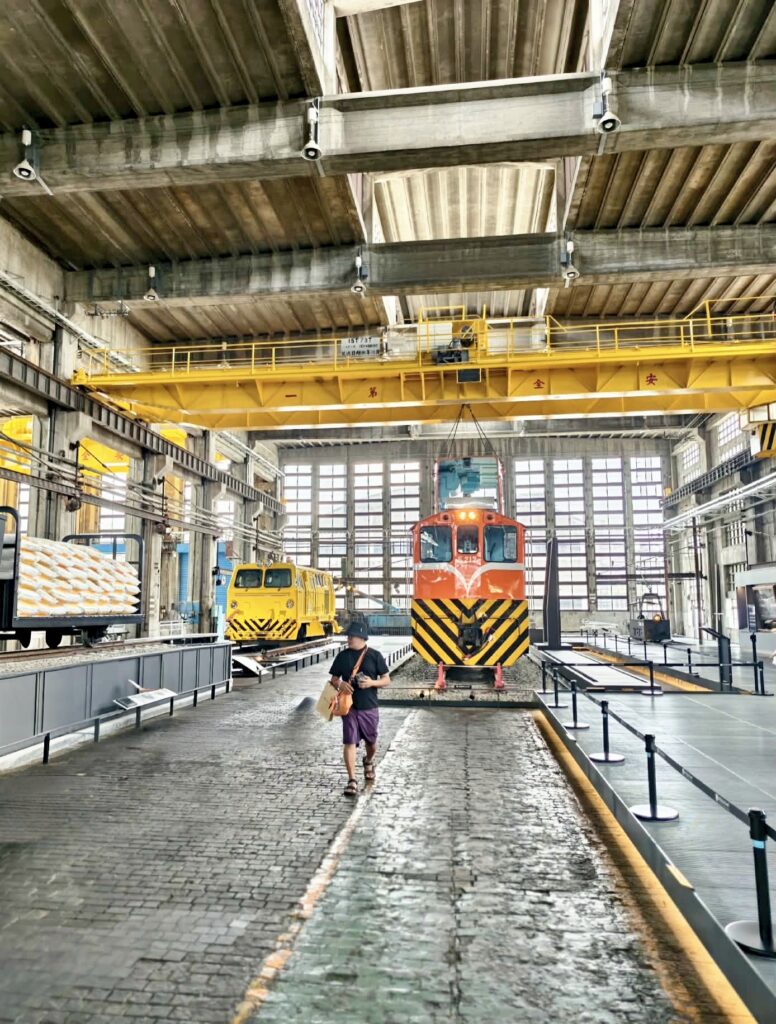
Our guide left us with one final, profound reflection: “The history of the railway isn’t just a history of moving things. It’s a history of overcoming distance, of connecting people, and of the incredible grit of the human spirit. These early engineers were not just building infrastructure; they were building a nation’s future.”
Our experience at the National Taiwan Railway Museum was more than just a historical excursion. It was a powerful reminder of the deep roots of innovation in Taiwan and a celebration of the visionaries who laid the tracks for a modernized island. Whether you are a die-hard railway enthusiast, an architecture geek, or a traveler who simply loves discovering beautifully preserved corners of Asia, this museum offers a peaceful, educational, and photogenic escape right in the center of Taipei. It is a must-visit destination for anyone looking to understand the true engine of Taiwan’s remarkable history.
If you are planning a cultural day out, consider buying a combo ticket. The Railway Department Park is an official branch of the National Taiwan Museum system, making it incredibly easy to bundle your visit with the grand Main Building or the dinosaur-filled Land Bank Exhibition Hall located nearby!